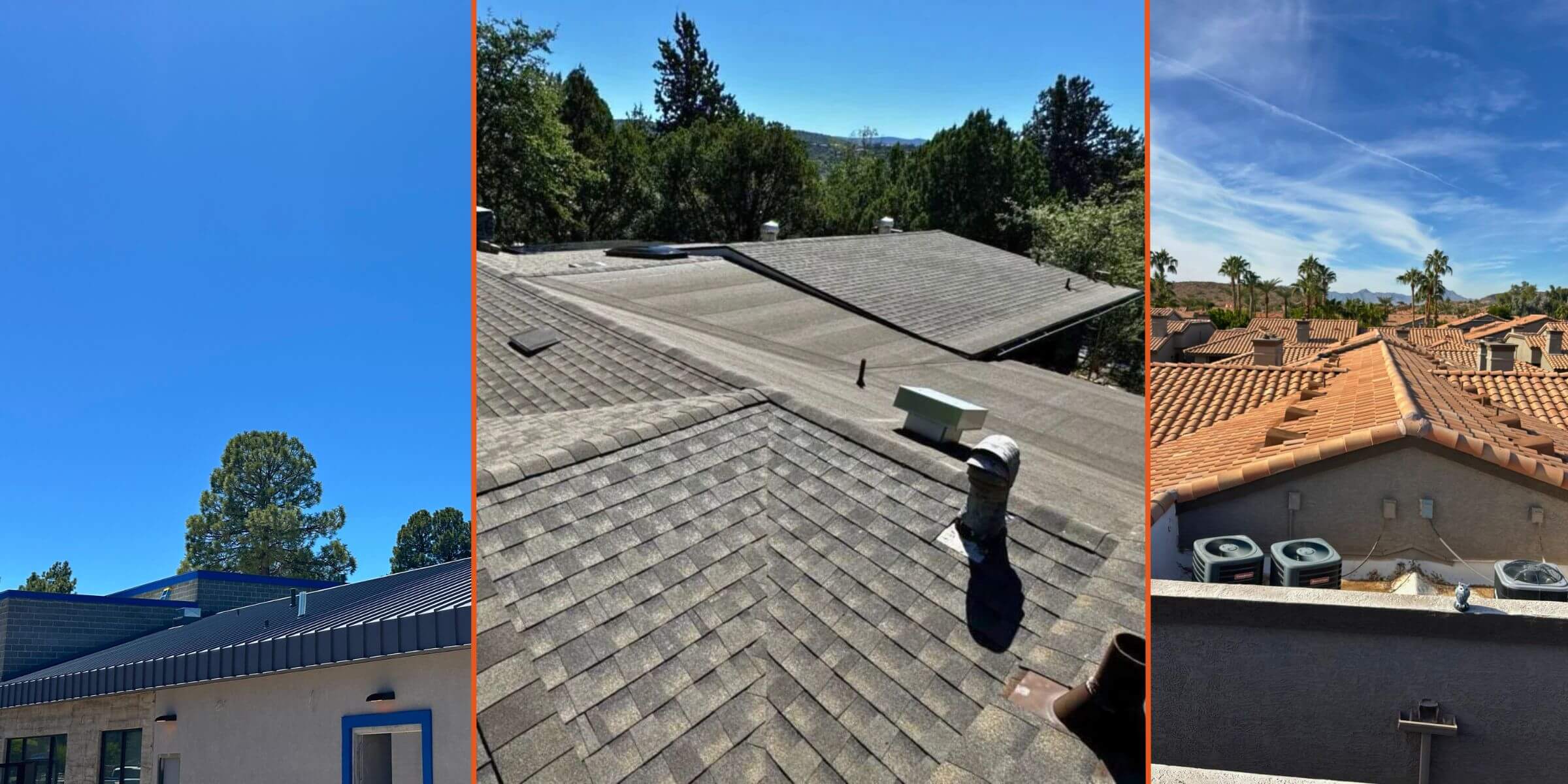

Arizona is known for its warm climate, but it also gets monsoon storms. Some areas of the state can get cold weather and snow, too. When comparing the most durable roofing materials for Arizona homes, local conditions matter. A roof covering that works well for a home in Prescott may not be the right fit for a home in the Phoenix Metro.
In general, tile and metal are often chosen for their potential longevity. Asphalt shingles can be a practical, more affordable option, while flat and low-slope roofs need a system designed for their pitch. There isn’t one material right for every home, and a roof’s service life depends on its design, installation, maintenance and local conditions. For example, tile can still be in good condition even when the underlayment beneath it needs to be replaced.
What Does “Long-Lasting” Mean?
Along with the roof covering, a roof includes components such as underlayment, flashing, fasteners, drainage, roof decking and the areas around vents and other openings. These parts work together to protect a home.
Tiles can continue to look good even as the underlayment beneath them deteriorates. Poorly installed flashing can leave a roof vulnerable to leaks, even when it has quality shingles. Low-slope membrane roofs also need properly sealed seams and effective drainage to perform well.
A good warranty can be useful, but it does not necessarily mean that a roof will last for the entire warranty period. Warranties vary by product, and coverage may depend on how the roof is installed and maintained. Review the warranty to see what it covers and what requirements apply.
Arizona Weather and Roofs
Properties in Prescott and Yavapai County can experience cold weather, snow, strong winds and temperature changes. Properties in Glendale and the Phoenix Metro generally get long periods of hot, sunny weather. Monsoon storms can bring heavy rain, hail and strong winds to parts of central and northern Arizona. The Arizona State Climate Office has more information about Arizona’s monsoon season and explains the seasonal weather pattern.
Sun exposure is a consideration throughout Arizona, but other factors also affect a roof’s performance, including its pitch, shade, drainage and attic ventilation.
Reflectivity can be important, especially in hotter areas. The U.S. Department of Energy explains that a roof’s solar reflectance and thermal emittance affect how it handles heat. Reflective options are available for several roof coverings, including asphalt shingles, tile, metal and low-slope membranes. Our article on choosing shingle colors for Arizona homes covers how color, home style and reflectivity can factor into that decision. The Department of Energy’s Consumer Guide to Cool Roofs explains these properties in more detail.
How the Most Durable Roofing Materials Compare
The table below gives broad estimates for the service life of different roof coverings. These are not Arizona-specific guarantees, and they do not compare exactly the same parts of every roof system. Tile, for example, can last much longer than the underlayment beneath it.
| Roof covering | Broad published estimate | What may need attention first |
|---|---|---|
| Asphalt shingles | About 20 to 30 years | Shingles, flashing or underlayment |
| Concrete or clay tile | Tile may last 50 to 100 years or more | Underlayment, flashing, or cracked or displaced tiles |
| Metal roofing | About 30 to 50 years or more | Fasteners, seams, finish or flashing, depending on the system |
| Flat and low-slope roofing | About 15 to 30 years as a broad estimate | Seams, drains, flashing and the roof surface, depending on the system |
These estimates come from GAF’s residential roofing guidance and flat-roof guidance, the Metal Roofing Alliance, and the Tile Roofing Industry Alliance. Actual service life depends on the material, roof design, installation, weather and maintenance. A warranty term is not necessarily the same as a product’s expected service life.
Asphalt Shingles
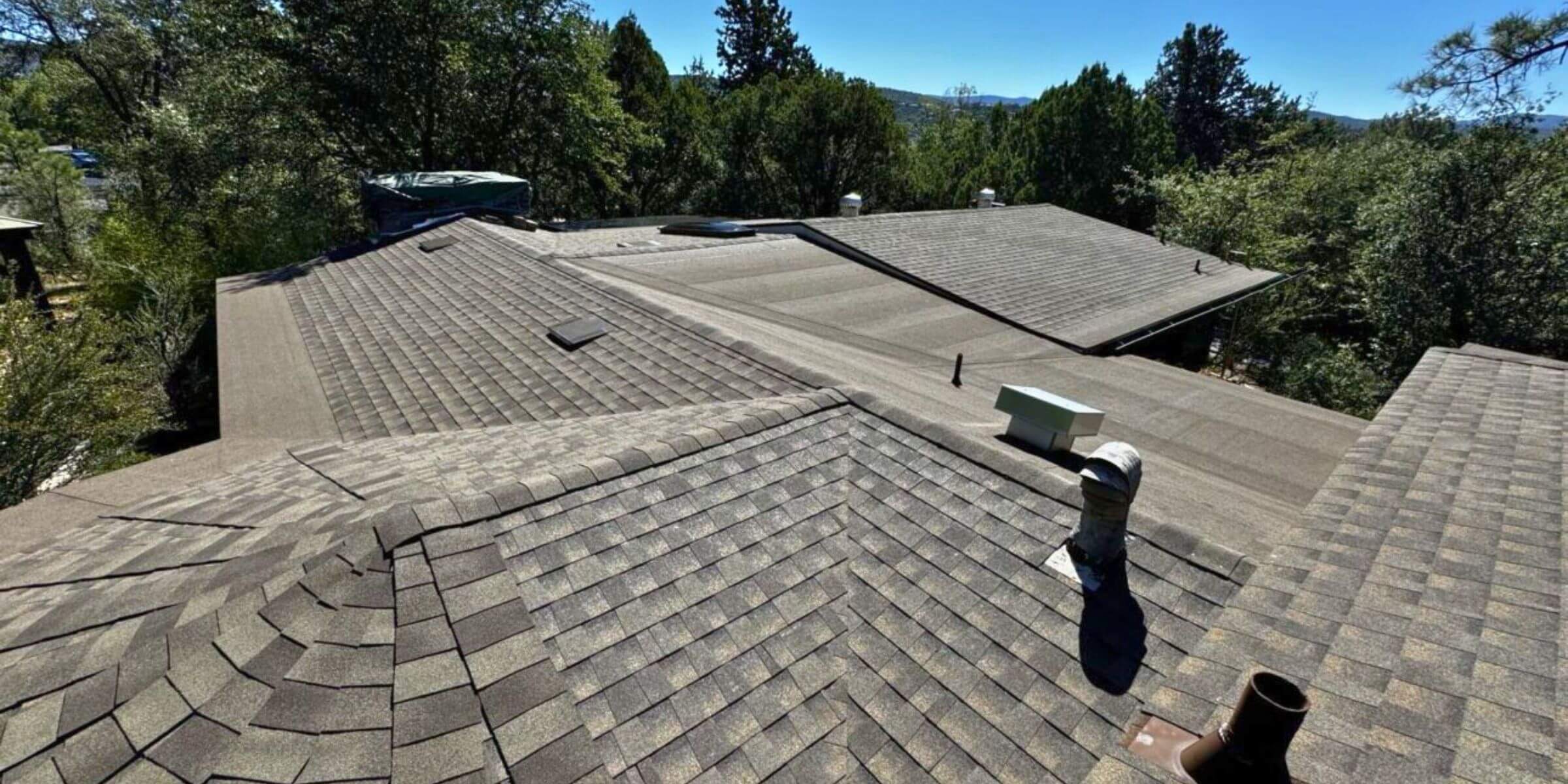
Asphalt shingles are often used on pitched roofs and come in a wide range of prices and designs. Architectural shingles have a more dimensional appearance than conventional three-tab shingles.
Some shingle products are tested for wind and impact resistance. Reflective properties vary by product. These ratings and features describe how a product performs under specific conditions. They do not guarantee that a roof will be unaffected by severe weather.
Underlayment, flashing, drainage, leak barriers and proper fastening also affect how the roof performs. When comparing asphalt shingles, review the specific product’s warranty and installation guidance. For example, GAF’s residential warranty information outlines product-specific coverage and requirements.
Concrete and Clay Tile
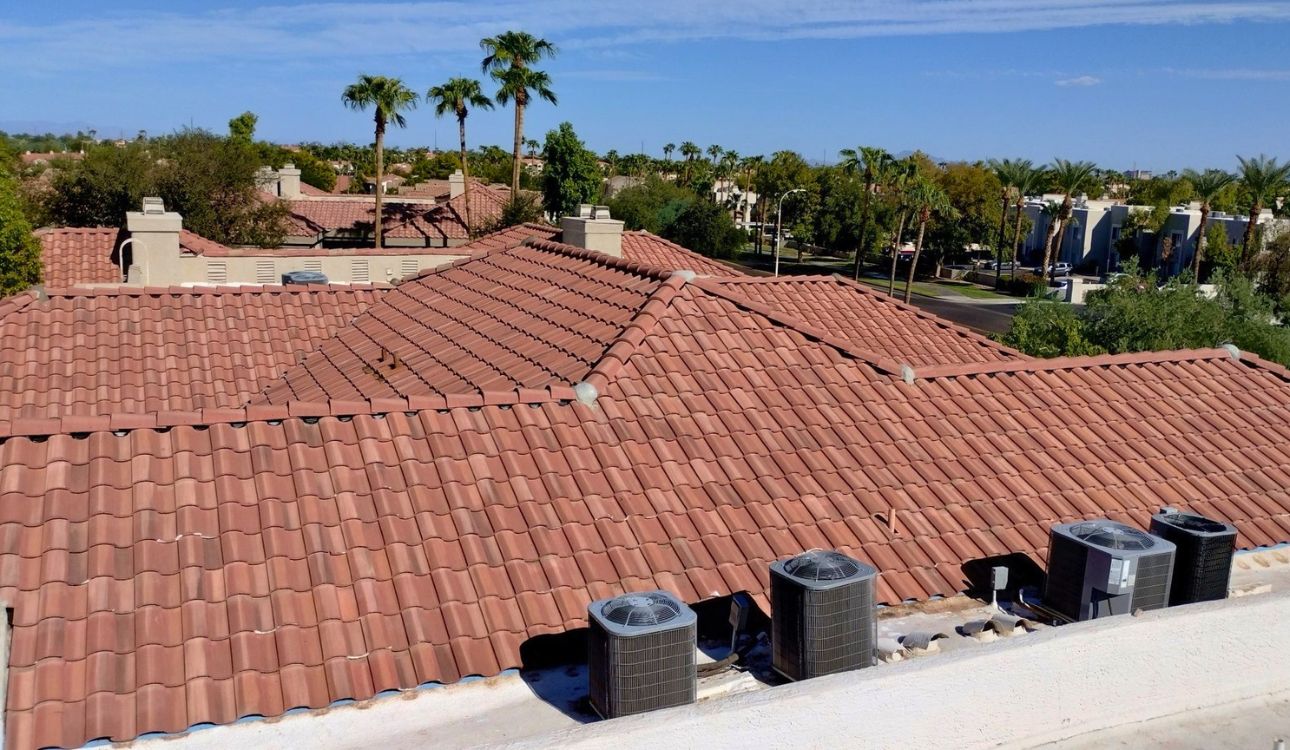
Concrete and clay tile are common roof coverings in Arizona. They can last a long time when installed as part of a well-designed system. Underlayment, flashing and secure attachment all help protect the home. The Tile Roofing Industry Alliance describes tile as a long-lasting option, but that does not mean every part of a tile roof will last as long as the tiles.
We saw this on a Prescott tile underlayment project. The 22-year-old felt underlayment had dried out and caused severe leaks in the valleys. We were able to save more than 95% of the original tile while replacing the underlayment. It’s a good example of why the appearance of the tiles alone does not tell you the condition of the whole roof.
Tiles can also crack or shift if people walk on them incorrectly. Damaged tiles can leave the underlayment more exposed to water and sunlight. A roofing professional can check for damage and determine whether repairs are needed.
Metal Roofing
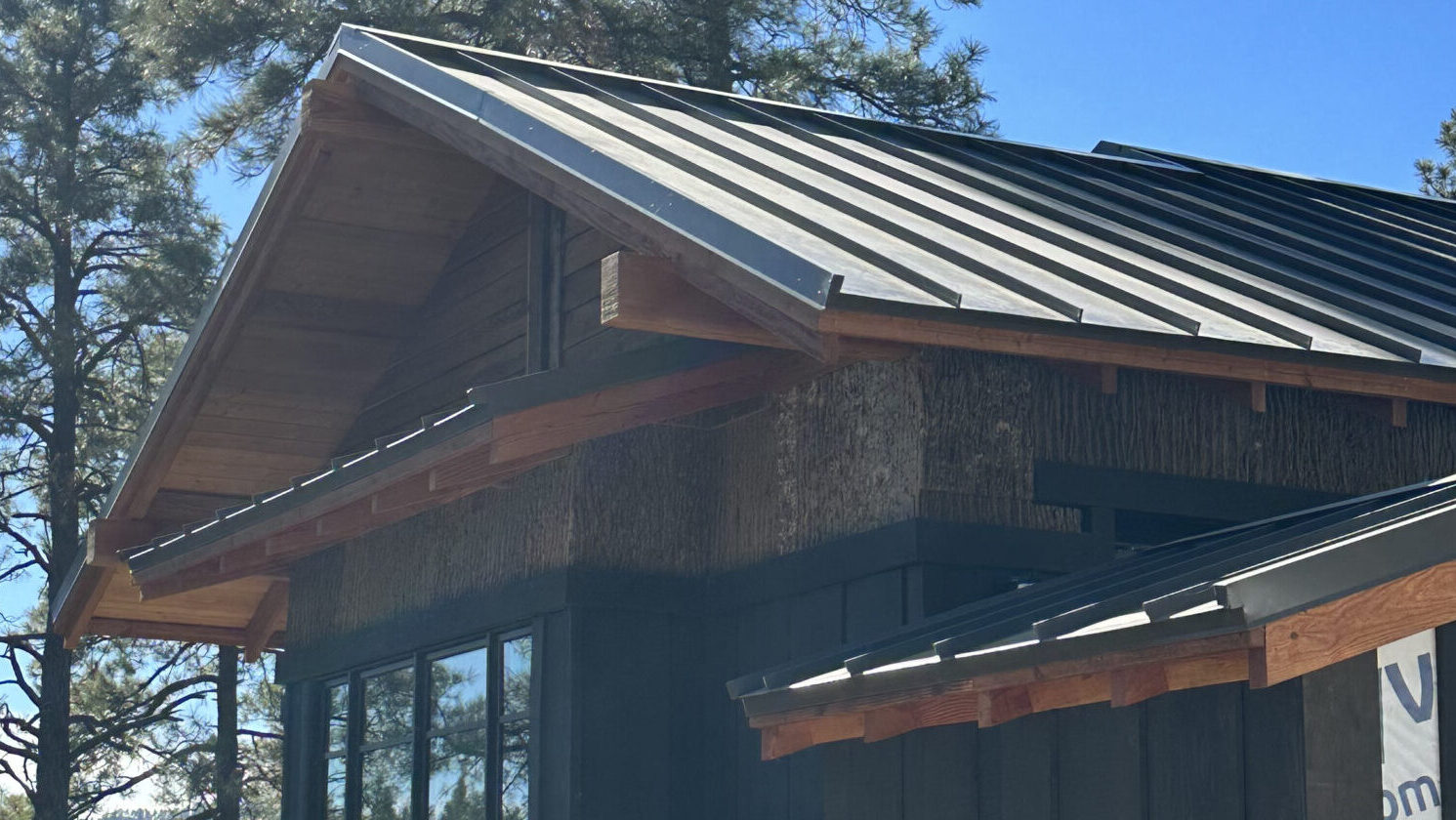
Metal roofing, including standing seam metal, can be a good choice for homeowners looking for a durable roof covering. The Metal Roofing Alliance estimates that metal roofs can last 30 to 50 years or more. Actual service life depends on the metal system and how it is installed.
Panel system, metal type, finish, fasteners, roof pitch and design all affect performance. Flashing and drainage matter, too. Some metal products have reflective finishes, but knowing that a roof is metal does not tell you how reflective it is.
When comparing metal roofing, ask about the panel system, fasteners, finish and product warranty.
Flat and Low-Slope Roofs
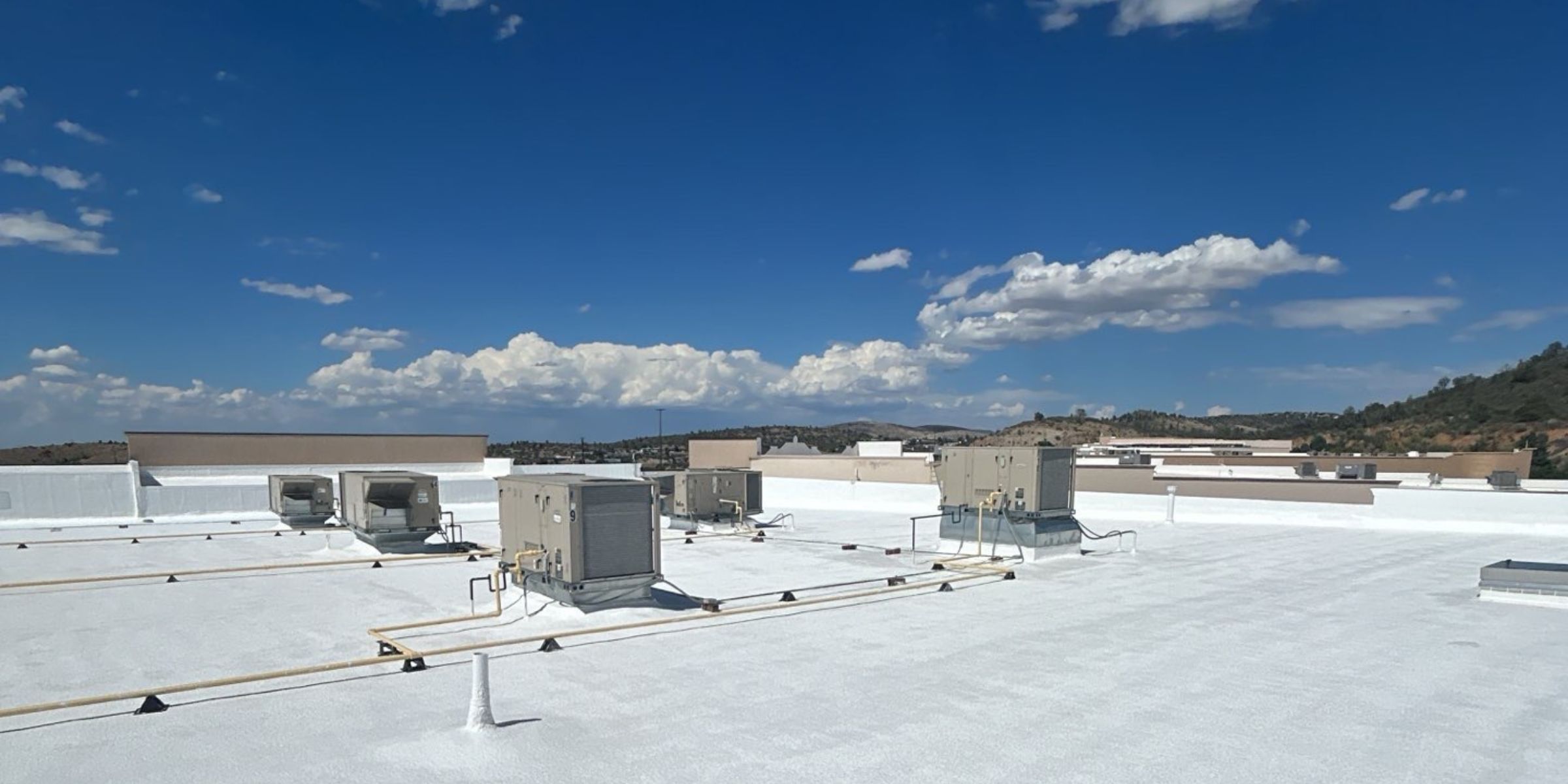
Some homes have flat or low-slope roofs that need a system designed for that pitch. Water drains differently from a low-slope roof than from a pitched roof. Depending on the property and project, options may include TPO or PVC membranes, modified bitumen or another suitable system.
There is no single service-life estimate that applies to all low-slope roofs. Performance depends on the membrane, seams, drainage, flashing, roof edges and areas around rooftop equipment. Silicone roof coatings may be part of a repair, restoration or maintenance plan for a suitable roof. They are not necessarily the right solution for roofs with significant damage, moisture problems or poor drainage. The roof should be inspected to determine whether a coating is appropriate.
Other Factors That Affect Roof Longevity
Along with the roof covering, choices made before and during installation can affect how long a roof lasts:
What Might Suit My Roof?
Think about your roof and the conditions it faces. Is it pitched or low-slope? Does it need to handle cold weather, hot weather, or both? Is the roof structure suitable for the covering you’re considering? You should also consider the upfront cost, appearance and ongoing maintenance.
For a pitched home in Prescott, asphalt shingles, concrete or clay tile, and metal could all be suitable options. In the Phoenix Metro, reflectivity may also be worth considering because of the extended hot weather. For a flat or low-slope roof, a suitable membrane system may be a better fit.
A roofing professional can assess the roof’s condition, pitch, drainage and existing materials to help identify possible solutions.
Protecting Your Roof
- 1Have the roof checked after severe weather or if you notice signs of a leak.
- 2Keep drains and drainage paths clear, especially on low-slope roofs.
- 3Ask a qualified roofer to check flashing, valleys, roof edges and roof penetrations.
- 4Avoid walking on roofing materials unless you have the right experience and equipment.
- 5Keep records of roofing products, repairs and warranties.
- 6Address damaged or displaced materials promptly to help prevent water from reaching the layers beneath them.
Selecting the Right Roofing System
Concrete and clay tile, metal, asphalt shingles and low-slope systems can all provide good service when they suit the property and are installed as complete systems. Tile and metal are often chosen when longevity is a priority. Asphalt shingles can be a practical, lower-cost option for pitched roofs. For flat and low-slope roofs, the right system depends on the building and its drainage design.
Here at Yavapai Roofing, we help Arizona property owners understand their roof’s condition and consider repair or replacement options. From our Prescott home base and Glendale office, we work on residential and commercial roofing projects throughout Arizona.
Related Articles
Best Shingle Colors for Arizona Homes
Choosing a shingle color in Arizona is about more than curb appeal. Learn how climate, home style, HOA requirements, reflectivity, and today’s GAF color options can help you choose a roof that looks right and performs well…